
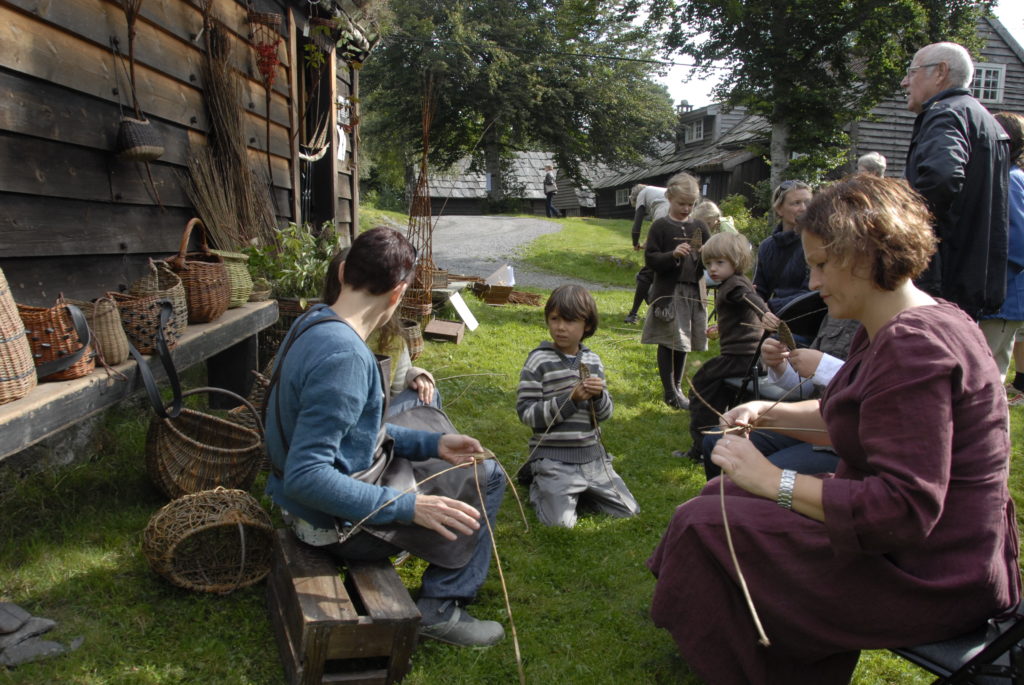
Sunnhordland Museum have regional museum responsibilities for all eight municipalities in Sunnhordland (Austevoll, Bømlo, Etne, Fitjar, Kvinnherad, Stord, Sveio and Tysnes). The museum also owns a historic site in Ølen, Vindafjord.
Our museum has an important task as «memory bank» for the region. That means that we document our regional history through collection, preservation, research and dissemination.
Documentation of some of the objects from our vast collection can be seen here: Sunnhordland museum at DigitalMuseum.
The museum shall promote the important interest in gaining knowledge about the past, and in particular stimulate children and young people’s interest in the local history. Sunnhordland museum is responsible for sites and yards in six municipalities in Sunnhordland.
The museum administers 41 antiquarian buildings, a large object collection, and photographic and private archival collections. We work with many historic epoques, streching from the Middle Ages on Halsnøy abbey, the traditional peasant culture and early industrialization in boat construction and canning industry, up to today’s modern mechanical shipping and petroleum industries.
Do you want to learn more og visit one of our sites? Please contact us.
Historic sites in Sunnhordland managed by the museum:
- Sunnhordlandstunet (Leirvik, Stord): The museum comprises ten buildings: including open hearth huts, several farm houses, a school house, a country store and a fisherman’s house. The museum has permanent exhibitions featuring fishery and coastal industries, life in prehistoric times and a local textiles exhibition. Sunnhordlandstunet also has several less permanent exhibitions that change regularly. See opening hours.
- Halsnøy abbey (Halsnøy, Kvinnherad): The Augustine abbey courtyard containes what remains of the Augustinian abbey built by Erling Skakke in 1164. After the reformation, the sheriff and the bailiff was seated here. The farmhouse was built in 1841, and a garden and jetty are also included. It is an arena for cultural events every year. See opening hours.
- Sæbøtunet in Etne: Courtyard with eight houses from 1700-1800. It is the biggest Authentic museum courtyard in our region. See opening hours.
- Nerheimstunet in Ølen (Vindafjord): Courtyard from the middle of the 19th century, the buildings are typical for Sunnhordland after the land redistribution (about 1835). Open three days a week during summer.
- Nistovetunet (Omvikedalen, Kvinnherad): Courtyard from 1800. The houses contain much of the origial movables.
- Haua house (Omvikedalen, Kvinnherad: A typical Norwegian «lemstove» (house with a loft). The home of author Jens Tvedt.
- Gjerdetunet (Mauranger, Kvinnherad): Courtyard with open hearth hut, and a storehouse from 1588.
- Seløystova (Tysnes): Originally it was a open heart hut from the early 1700s. Which has been built on in several stages. It was most likely a residential house.